

In Vedic astrology, the concept of Dusthana Bhavas plays a crucial role in understanding the more challenging and transformative aspects of a person’s life. The term “Dusthana” originates from Sanskrit, meaning “bad place” or “inauspicious house.” These houses are associated with suffering, difficulties, hidden issues, karmic debts, and spiritual evolution through hardship. The Dusthana houses in the astrological chart are the 6th, 8th, and 12th houses. While these houses often bring discomfort, they are essential for personal growth, inner strength, and eventual liberation when handled consciously.
The astrological chart is divided into twelve houses, each representing a specific area of life. Among these, the Dusthana houses are particularly sensitive. The challenges they signify are not meant to be seen purely as punishment or misfortune. Instead, they are considered vehicles of transformation, forcing individuals to confront internal weaknesses, health concerns, attachments, or unresolved karmic patterns.
The 6th House: Struggle, Conflict, and Overcoming Challenges
The 6th house in Vedic astrology is often regarded as the least negative of the three Dusthana houses. It deals with health issues, enemies, daily work, service, debt, legal disputes, and obstacles. However, it is also considered an Upachaya house, meaning it improves with time and effort. This makes the 6th house a dual-natured place where hardship can lead to strength.
Planets placed in the 6th house often manifest as areas of life where constant effort is needed. For instance, Saturn here may bring chronic struggles or difficult routines, but also the capacity to endure and persist. Malefic planets like Mars or Rahu in the 6th can empower the individual to confront challenges boldly, often defeating opponents or overcoming illnesses. Benefic planets in the 6th can sometimes support analytical abilities or a helpful attitude, but they may also weaken physical health or introduce hidden opposition.
The 6th house demands humility, service, and the capacity to handle criticism or pressure. It’s the battlefield of everyday life, where one fights the internal and external enemies that test resilience and discipline.
The 8th House: Transformation, Death, and Hidden Realities
The 8th house is often seen as the most intense of the Dusthanas. It represents death, longevity, sudden events, secrets, mysteries, occult sciences, transformation, and inheritance. This house forces individuals to face what is hidden—both within themselves and in the outer world.
A planet placed in the 8th house is often put through cycles of change, rebirth, and emotional or physical turbulence. Malefic planets here can cause fear, accidents, or early health issues, while benefics may soften the house’s effects but not eliminate the intensity. The Moon in the 8th, especially if weak or afflicted, is known for emotional instability, sensitivity to crisis, or psychological trauma in early life. However, this house also holds the potential for deep healing, wisdom, and spiritual awakening, especially if one consciously works with its energies.
The 8th house encourages self-reflection, research, and an understanding of life’s impermanence. It also governs joint resources, making it relevant in the context of marriage, partnerships, and shared financial matters. It is the house of the unseen — often avoided, but ultimately transformative.
The 12th House: Loss, Isolation, and Spiritual Liberation
The 12th house governs loss, foreign lands, isolation, sleep, imprisonment, hospitals, and ultimately moksha (spiritual liberation). This house indicates a release from material attachments and worldly identity. While this can manifest as isolation, financial loss, or emotional withdrawal, it also offers an opportunity to transcend the ego and experience deeper spiritual realities.
Planets in the 12th house often express their energies in subtle, internalized, or hidden ways. Venus here is considered beneficial, as it supports spiritual comfort, pleasure through solitude, or artistic and romantic experiences that transcend the material world. Ketu also functions well in this house, facilitating detachment and deep spiritual perception. On the other hand, malefics like Rahu may lead to compulsive escapism or confusion, though Rahu in the 12th may also grant success through foreign connections or unusual talents.
The 12th house is not necessarily negative, but it deals with the end of things — endings that can bring pain if resisted, but peace if embraced. It represents the soul’s journey inward, away from the distractions of the physical world.
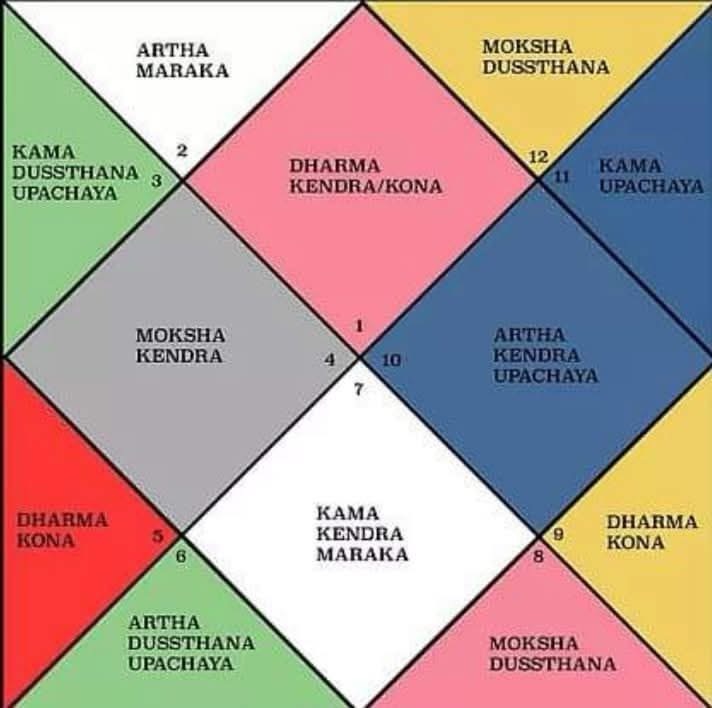
Planets as Lords of Dusthana Houses
If a planet rules one of the Dusthana houses (6th, 8th, or 12th), it tends to carry the challenging energy of that house wherever it is placed. For example, if Venus rules the 6th house and is placed in the 1st house, it may bring issues related to relationships, health, or enemies into one’s self-expression. These planetary placements need careful interpretation, especially in terms of aspects, conjunctions, and dignity.
However, in some cases, Dusthana lords can also neutralize each other’s effects when placed in one another’s houses — a concept known as Viparita Raja Yoga. This yoga can bring unexpected success or power through adverse circumstances.
Dusthana Houses and Karma
Dusthana houses are deeply karmic. They reveal past life tendencies, debts, and unfinished lessons that manifest in this life as challenges. The 6th house shows karmic debts to others; the 8th reveals inherited karmas or shared transformations; the 12th indicates the karma of surrender and detachment. Understanding these houses is key to evolving beyond surface-level astrology and embracing a path of spiritual maturity.
While the results of these houses may feel burdensome, they are often necessary for breaking old cycles and advancing on the soul’s path. They are not to be feared, but to be respected as powerful catalysts for inner growth.
Exceptions and Special Cases
Some planets perform relatively better in certain Dusthana houses. Venus, for instance, in the 12th house may bring pleasure and spiritual luxury. Ketu here may give enlightenment and psychic depth. Rahu in the 6th house can help overcome opponents or toxic habits. Saturn in the 8th, though difficult, may grant long life and resilience when mature.
Additionally, the 6th house being an Upachaya house means that planets here, especially malefics, can become stronger and more beneficial over time, after age and effort. This nuanced view shows that even Dusthana placements can yield positive results with the right consciousness and karma.
Psychological and Spiritual Impact
Beyond physical events or challenges, Dusthana houses affect the psyche. The 6th house can create anxiety, perfectionism, or inferiority complexes. The 8th may stir existential fear, obsession, or fascination with hidden truths. The 12th may lead to isolation, but also deep meditative states or divine experiences.
These houses strip away the superficial layers of life. They push a person to find meaning in suffering, purpose in loss, and strength in solitude. Working with Dusthana energies consciously can lead to emotional intelligence, spiritual discipline, and lasting transformation.
Dusthana Bhavas are not merely sources of misfortune. They are part of the deeper mechanics of karma and evolution. Though associated with suffering, they are also houses of growth, maturity, and liberation. They challenge the native not to escape or resist but to confront, endure, and transcend. In the broader spiritual vision of Vedic astrology, Dusthana houses play an essential role in shaping the soul’s journey from bondage to freedom.

 Invest In Yourself First!!