

Every child carries a unique inner pattern—emotional temperament, learning rhythm, physical constitution, and instinctive responses. Vedic astrology provides a structured framework to understand these traits with precision. When parents work with this knowledge, they can guide the child in a way that aligns with their natural strengths and supports their developmental needs.
Core Indicators in the Birth Chart
The child’s main chart (D1) is the central tool for assessing their nature.
• The ascendant shows physical constitution, energy, and approach to life.
• The Moon reveals emotional needs, sensitivity, and reactions.
• The fourth house shows emotional grounding and the nurturing environment.
• The fifth house highlights intelligence, creativity, and early learning style.
• The ninth house reflects guidance and the father’s influence.
• The sixth house points to health tendencies.
• The eleventh house indicates social development and peer interaction.
These placements help parents understand how the child responds to situations, what motivates them, and which environments support healthy growth.
Diet and Constitutional Support
Ayurveda complements astrology by identifying the child’s constitutional type—Vata, Pitta, or Kapha. The Moon’s nakshatra, ascendant sign, and dominant planet show which dosha is most influential. Aligning nourishment and daily habits with the child’s constitution enhances emotional stability, cognitive clarity, and physical wellbeing.
Supporting the child’s natural constitution helps regulate mood, strengthen immunity, and maintain balance as they develop.
Behavioural and Emotional Patterns
Planetary influences around the Moon help determine emotional rhythm—how the child expresses feelings, how they cope with pressure, and what creates security. Some children are expressive and spirited; others are quiet and observant. Astrology clarifies these inclinations so parents can guide behaviour with sensitivity and accuracy.
The chart also indicates the child’s relationship with structure, independence, reassurance, and boundaries. Knowing these patterns helps parents create an environment where the child feels understood and supported.
Divisional Charts for Deeper Insight
Divisional charts refine the understanding of specific aspects of a child’s growth:
• D9 (Navamsa): emotional maturity, inner nature, and long-term personality tendencies.
• D24 (Chaturvimshamsha): learning capacity, intellectual motivation, and educational style.
• D30 (Trimshamsha): emotional vulnerabilities, resilience, and behavioural patterns.
• D12 (Dwadasamsa): supportive insights into parental influence and ancestry (used as a complement to the D1 chart).
These charts are interpreted together to provide a multi-layered view of the child’s development.
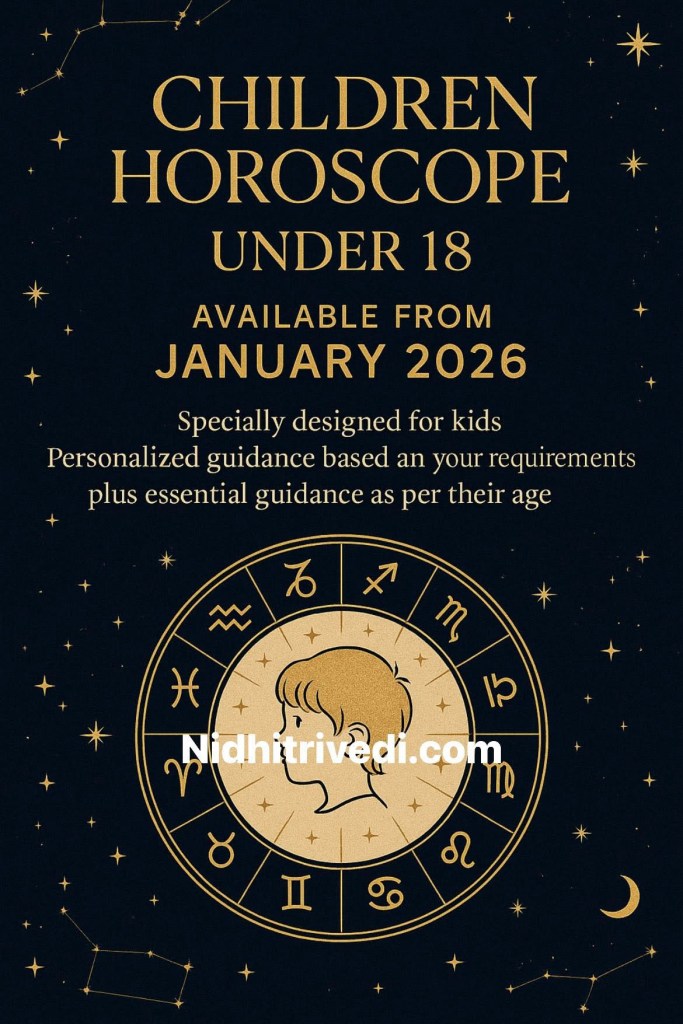
Comprehensive Child Guidance (Available January 2026)
Starting January 2026, a dedicated child-focused consultation will be available for individuals under 18. This detailed analysis—up to 5000 words—integrates the main chart with relevant divisional charts to offer a complete developmental blueprint. It is crafted to help parents understand:
• the child’s emotional makeup
• learning style and educational direction
• suitable physical or creative activities
• social interactions and peer behaviour
• early strengths and potential challenges
• recommended yogic practices and pranayama
• health-related tendencies
• supportive environments aligned with their constitution
• long-term developmental requirements
This consultation provides a structured, personalized framework for parents seeking deep and accurate guidance for their child’s growth. Bookings open January 2026.

 Invest In Yourself First!!